The only city infrastructure show bringing together global visionaries, city planners and key stakeholders working on major infrastructure projects
1 June, 2021
| Dubai, United Arab Emirates
Port Development Middle East Forum Day One: Monday, 6 April 2020
Roads, Bridges & Highways Pre-Forum Workshops: Sunday, 5 April 2020
Roads, Bridges & Highways Forum Day One: Monday, 6 April 2020
Roads, Bridges & Highways Forum Day Two: Tuesday, 7 April 2020
Housing, High Rise, Commercial Buildings Pre-Forum Workshops: Sunday, 5 April 2020
Housing, High Rise, Commercial Buildings Forum Day One: Monday, 6 April 2020
Housing, High Rise, Commercial Buildings Forum Day Two: Tuesday, 7 April 2020
Storm Water & Waste Water Infrastructure Forum Day One: Monday, 6 April 2020
Storm Water & Waste Water Infrastructure Forum Day Two: Tuesday, 7 April 2020
Port Development Middle East Pre-Forum Workshops: Sunday, 5 April 2020
Port Development Middle East Forum Day One: Monday, 6 April 2020
Port Development Middle East Forum Day Two: Tuesday, 7 April 2020
Free Tech Theatre: Hotel Build Agenda:Tuesday, 6 April 2020
9:00 am - 9:30 am
REGISTRATION AND WELCOME COFFEE
9:30 am - 10:00 am
OPENING REMARKS AND SPEED NETWORKING
To boost networking and interaction, participants will greet each other and exchange maximum number of business cards in 15 minutes and build connections that matter
Chairman:
10:00 am - 10:30 am
INTERNATIONAL CASE STUDY: Building the world’s largest, fully-automated terminal
Singapore is set out to reimagine the ports sector with its groundbreaking development and construction of Tuas port which promises to be the world’s largest fullyautomated terminal by 2040 with the cargo handling capacity of 65 million TEUs per annum. First phase is expected to be operational in 2027 costing $2.42 billion. Sustainability and innovation are the key features behind building the mega port.
- How implementation of intelligent data-driven operations management systems is helping to boost efficiency, productivity, material waste reduction and environmental sustainability
- How eco-friendlier approach to ports construction helped cost savings of almost $2 billion during land reclamation
- What are the initiatives taken by the port authorities to go beyond a physical port infrastructure into logistics capabilities and integrated digital system
Reserved for PSA International/MPA
10:30 am - 11:15 am
PANEL DISCUSSION: Seaports at the forefront of World Economic Corridors
Roger Clasquin -
Chief Commercial Officer,
Ras Al Khaimah Ports
Eng. Mohammad A. Al Dardasawi - Chief Officer- Ports Development & Construction, Aqaba Development Corporation
Karim Omran - Commercial Director, Red Sea Gateway Terminal
GCC ports are moving towards a ‘one-stop-shop’ bureaucracy and integrating with free zones for immediate and easy access to seaport. With good infrastructure, efficiency and custom-free trading zones and no foreign ownership restrictions, port authorities are taking measures to stay relevant with customer demands and efficient solutions. In addition to this, UAE’s Khalifa Port, Oman’s Duqm, Saudi Arabia’s Jizan, East Africa’s Djibouti, and Egypt’s Port Said and Ain Sokhna will be the key projects that China will be developing in building the BRI in the Middle East.
- Addressing legislation, commercialisation, expansion and financing models
- Seaports as gateways and economic corridors shaping supply chain economy; upcoming integration
- Ports as gateways to facilitate trade, engagement and regional growth and foster global partnerships
- The economic impact of corridor investments to international trade
- Generating economic benefits and efficiencies or maximising traffic volumes
- The reality, opportunities and challenges facing seaport gateways and corridors now and in the future
Panellists:
Reserved for Shuwaikh Port
Reserved for Port of Duqm


Eng. Mohammad A. Al Dardasawi
Chief Officer- Ports Development & ConstructionAqaba Development Corporation

11:15 am - 11:45 am
INTERNATIONAL CASE STUDY: Rotterdam’s container tracking application
Port of Rotterdam has adopted digital applications to make the port more reliable, efficient and safe. The transition and ambition to be the world’s smartest port has made it imperative for them to integrate stand-alone applications to the existing systems.
- How has the container tracking application enabled shippers and freight forwarders to check the location of their containers at any time?
- How can the real-time status information reduce the container tracking time by 50% and assist in planning during disruption or delays?
- How does the app benefit in transhipment and increase terminal performance?
Reserved for Port of Rotterdam
11:45 am - 12:15 pm
CASE STUDY: Khalifa Port Terminal Expansion
As a part of the five-year strategy and to meet the growing demand, Abu Dhabi Ports Authority are partnering with the global players like China’s COSCO to expand port capacity with the future trending growth. The expansion of Khalifa port is anticipated to reach 9.1 million TEU by 2024.
Learn about government initiatives and investments in Khalifa Port Container Terminals’ infrastructure and facilities to create the Middle East’s first semi-automated and most technologically-advanced container terminal.
- Capacity expansion: Prominent issue to resolve to accommodate larger berths and container terminals
- How to ensure safety, innovation, and excellence in container terminal operations?
Reserved for: Abu Dhabi Ports / Khalifa Port Container Terminal
12:15 pm - 1:45 pm
LUNCHEON AND NETWORKING
PORT EFFICIENCY AND OPTIMISATION
1:45 pm - 2:15 pm
Best practices to enhance port efficiency
Capt. Devathirajan. R -
Harbour Master [Port Khalid],
Sharjah Ports Authority
The efficiency of the ports industry is in constant focus and plays a vital role in supply chain management and logistics processes. Best operational methods, technologies and enhanced information, cross-platform standardisation are the key metrics to benchmark and improvise optimisation strategies.
- How can intelligent cargo systems change the way we move freight and optimise transportation by decreasing fuel costs and emissions?
- Know more about port call optimisation, avoiding disruptions, unexpected cargo volumes, vessel breakdown, unexpected vessel traffic, terminal productivity, vessel supplies, etc.
- Achieving high productivity and efficiency of operation with infrastructure, customs, service quality
- Smarter port management systems, electronic document handling, trade processing, digitisation and more

2:15 pm - 2:45 pm
Best practices to enhance terminal performance
Ghazi Masmoudi -
Head of Operations – Project,
Abu Dhabi Terminals
Terminals play a major role in the supply chain, as they have to provide high level of business services. Terminals are collecting data but are they really improving their operations? This remains the biggest challenge even today. Only 7% of the terminals worldwide have some degree of automation, which is very low, so there is a great opportunity to implement technology in terminal efficiency
- How smart technologies will increase terminal performances?
- Terminal productivity - What is required?
- Fully-automated greenfield terminal vs conventional terminal?

2:45 pm - 3:15 pm
NETWORKING AND COFFEE BREAK
Interactive Discussion Groups
GROUP A
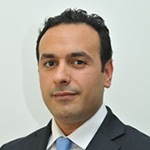
3:15 pm - 4:15 pm Material handling in the ports sector Wissam El Assal - Global IT Director, APM TerminalsPort and material handling equipment vehicles are estimated to expand by 2026 and are used for material handling in maritime ports. Tractors, stackers and lift trucks are used to carry material from the ship terminals to the warehouse and then to the distributor centre in the port.
- Material handling equipment’s in portscheduling and tracking
- Self-driving tractors and other port and material handling equipment vehicles in demand
- Predictive maintenance for cargo handling equipment
GROUP B
3:15 pm - 4:15 pm IoT-led supply chain in the ports sector Hussain Al Fardan - Head of Innovation Centre, Strategy & Corporate Excellence, Dubai CustomsSmart shipping will transform the sea logistics ensuring better performance management and conditioning monitoring via digital technologies.
- Learn how the vessel operators, ship managers, port personnel, equipment manufacturers and end customers can leverage connectivity to unlock IoT for business efficiency and customer satisfaction.
- Supply chain visibility in freight movements and valuable data for enhanced port operations

GROUP C
3:15 pm - 4:15 pm Asset management for ports and terminals for improved efficiency Ghazi Masmoudi - Head of Operations – Project, Abu Dhabi TerminalsEquipment handling should ensure high productivity and reliability.
- Enterprise asset management (EAM) solutions in the terminals has to be integrated into other port domains-finance and accounting, procurement and inventory management to monitor operations and intensify efficiency.
- What are the best available solutions in the market?