The only city infrastructure show bringing together global visionaries, city planners and key stakeholders working on major infrastructure projects
1 June, 2021
| Dubai, United Arab Emirates
Housing, High Rise, Commercial Buildings Forum Day One: Monday, 6 April 2020
Roads, Bridges & Highways Pre-Forum Workshops: Sunday, 5 April 2020
Roads, Bridges & Highways Forum Day One: Monday, 6 April 2020
Roads, Bridges & Highways Forum Day Two: Tuesday, 7 April 2020
Housing, High Rise, Commercial Buildings Pre-Forum Workshops: Sunday, 5 April 2020
Housing, High Rise, Commercial Buildings Forum Day One: Monday, 6 April 2020
Housing, High Rise, Commercial Buildings Forum Day Two: Tuesday, 7 April 2020
Storm Water & Waste Water Infrastructure Forum Day One: Monday, 6 April 2020
Storm Water & Waste Water Infrastructure Forum Day Two: Tuesday, 7 April 2020
Port Development Middle East Pre-Forum Workshops: Sunday, 5 April 2020
Port Development Middle East Forum Day One: Monday, 6 April 2020
Port Development Middle East Forum Day Two: Tuesday, 7 April 2020
Free Tech Theatre: Hotel Build Agenda:Tuesday, 6 April 2020
8:30 am - 9:30 am
REGISTRATION & EXECUTIVE BOARDROOMS
9:30 am - 9:40 am
TRANSITION TO MAIN CONFERENCE ROOM
9:40 am - 10:00 am
WELCOME ADDRESS AND CHAIRMAN’S OPENING REMARKS
INVESTMENT MODELS FOR HOUSING AND RESIDENTIAL INFRASTRUCTURE
According to BCG, by 2030, the number of people living in cities will jump from 3.1 billion to 3.8 billion, a rise of 22%. Consequently, demand for infrastructure spending and investment is likely to run at US$1 trillion a year for the next 20 years. Without continuous change and improvement to the way housing and residential infrastructure projects are procured, financed and delivered, it will be increasingly difficult for clients and the supply chain to extract value from these contracts in a sustainable manner. Against the background of constrained public finances, there is widespread belief that more private capital will be required to fund future housing and residential projects, an impression reinforced by numerous government announcements seeking private sector involvement in capital projects across the whole region.
10:00 am - 10:40 am
VISIONARY THINK TANK: How Do You Expect Housing And Residential Infrastructure Projects In Your Region To Be Funded Over The Coming Years?
Euan Llyod -
Lawyer Construction Specialist,
Al Tamimi & Co. UAE
Christopher Seymour - Managing Director, Mott MacDonald
H.E. Marwan Bin Jassim Al Sarkal - Executive Chairman, Sharjah Investment & Development Authority (SHUROOQ)
MENA’s region future projects pipeline exceeds USD 3.7 trillion. Construction and civil construction projects alone account for USD 2.4 trillion, according to a recent report by MEED Projects Statistics. US$2 trillion of mixed used development projects (apartment, villas and houses) are in the planning stage across the Middle East. This points to an increased appreciation of the opportunities emerging in the Middle East among both domestic and international investors.
This session will discuss the different approaches for funding and financing the housing and residential infrastructure.
- Which investment partnering model should you consider to be most effective in delivering your housing and residential projects
- How innovatively can different levels of government, developers, and other non-governmental entities work together for acquiring funds for a project
- How is technology disrupting the way developers and the investment community operates
- What role will private capital play in funding the growing housing and residential infrastructure and changing needs of developers?

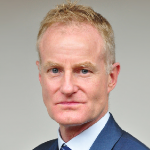
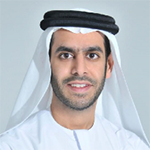
H.E. Marwan Bin Jassim Al Sarkal
Executive ChairmanSharjah Investment & Development Authority (SHUROOQ)
10:40 am - 11:10 am
REGIONAL TRAILBLAZER: UAE’s First Public Private Partnership Programme
Abu Dhabi enacted a new initiative, Dh50 Billion “Ghadan 21”, which is designed to encourage private sector involvement in housing, infrastructure and education projects in the capital. This session will talk about the initiative which sets out a general framework for the practice of PPP. What are the key factors that Abu Dhabi Investment office will consider identifying key projects that will benefit from a PPP model and how are they mitigating financial risks for the investors?
Reserved for Abu Dhabi Housing Authority
11:10 am - 11:40 am
EXHIBITION OPENING AND MORNING TEA
- VIP Opening Ceremony in Exhibition Hall
- Morning Networking Break
- Demo Drive
- Speed Networking
11:40 am - 12:10 pm
INTERNATIONAL KEYNOTE: Public Housing “A Singapore Icon” For Smart And Sustainable Living
With more than 1 million flats spread across 24 towns and 3 estates, the Singapore brand of public housing is uniquely different. The flats spell home for over 80% of Singapore’s resident population, of which, about 90% own their home.
This international keynote address will discuss their challenges and best practices which has led them to set a benchmark for public housing across the globe.
- How to build the sustainable and smart living ecosystem for the public?
- How to effectively implement the smart technology system for the effective living in community?
- What innovations are deployed to drive smart and sustainable living?
Reserved for Housing Development Board, Singapore
PROJECT DEEP DIVE
Attendees will need to pre-select the Deep Dive sessions they would like to join @ 12:20 and 13:00. Everyone will rotate between their two (2) choices, in back-to-back 30-minute intervals. There will be a ten (10) minute transitional break at 12:50. All attendees must pre-register for their two (2) Deep Dive sessions upon registering for the event. Registrations will be on a first-come-first-serve basis. If you do not pre-register for your Deep Dives, we’ll have to assign seating based upon demand and availability.
Round One
Digitising The Procurement Process
12:20 pm - 12:50 pm- Empowering developers through process modelling videos to enable them to get clear insights of the process.
- Subsequently, getting rid of tedious process manuals.
Navigating The Commercial Maze: How To Ensure Your Project Delivers On Time And Budget
12:20 pm - 12:50 pm- Over 50% of infrastructure projects fail due to budget and cost misalignment. How do you future-proof your development?
- What are the challenges to create certainty about delivery of a project on time and under the estimated budget?
Renewable Energy Solutions For Mega Projects
12:20 pm - 12:50 pm- Innovative solutions for grey water recycling, wind turbines, rain water collectors, and geothermal heat pumps are making their way into housing projects.
- Which should you incorporate, what are the benefits and challenges of these adoptions?
Design Thinking - Next-Gen Project Management
12:20 pm - 12:50 pm- Why is design thinking the future of project management?
- The best success on a mega-project comes when the project is planned and managed well. How can you leverage design thinking to enable you to take the leap of faith with?
12:50 pm - 1:00 pm
10-MINUTE TRANSITION BREAK
Round Two
Facilities Management In Housing And Social Infrastructure
1:00 pm - 1:30 pmHow do you maximise your facility’s performance while reducing operational costs and risk? What tools can be implemented to leverage engineering, infrastructure and management expertise, in order to provide an endto- end solution from inception and procurement, to design and operation for facilities management.
Best Practices For Successful Project Implementation
1:00 pm - 1:30 pmSo many projects fail to deliver even in their planning phase process.
Topics to be addressed:
- Horizontal space maximisation
- Design and build contracts
- Health and safety for labourers
- Planning app and project monitoring systems, BIM
Consulting Partner Selection: Mirror, Mirror On The Wall, Who Is The Best Of Them All?
1:00 pm - 1:30 pm- How do you decide which partner to go with?
- Why one size does not fit all?
Safety First: New Technologies To Ensure Your Housing Project Is Futuristic Safety Wise
1:00 pm - 1:30 pm- Ensuring effective evacuation strategy
- How new building and fire safety codes are changing
- New fire safety methodologies and solutions
1:30 pm - 2:00 pm
NETWORKING LUNCH - HEAD TO THE FUNCTIONALITY LOUNGES FOR AMPLIFIED NETWORKING
Dig deeper into the matters that interest and concern you most by sitting down for lunch with like-minded executives who work within the same area of functional responsibility as you. While on-site, you will be able to select from the below lunch lounges:
C-Suite - By Invitation Only I Consultants I Contractors I Project Owners I Financiers
SUSTAINABLE HOUSING
Sustainability is now a top priority in the region and countries like the UAE, Saudi Arabia and Lebanon have come up with their own green building rating system to incorporate socio-economic, environmental and cultural aspects in modern architecture. the UAE is spearheading the sustainability trend in the region, having the highest share of green buildings in the Middle East and North Africa. There are about 1,200 green buildings in MENA that have a Leadership in Energy and Environmental Design (LEED) accreditation. 29% of firms in Middle East have over 2 million square feet of green projects planned in the next 3 years, by far the highest globally.
2:00 pm - 3:20 pm
The Drive To Sustainable Living: World’s First Fully-Sustainable Community
Baharash Bagherian -
Head of Urban Planning,
Diamond Developers
In the past two decades, the UAE government has made an effort to lower its own dependency on fossil fuels, shifting towards more environmentally-friendly sources to power its cities. The UAE aims to have 75% of Dubai’s energy come from clean sources by 2050.
If the city pulls that off, it would have the smallest carbon footprint in the world. As part of this larger goal, local company Diamond Developers is building a city 18 miles outside central Dubai that’s designed to produce more energy than it consumes. Called Sustainable City, the development is expected to cost $354 million and be fully complete by 2019.
Understand and know about the unique concept which redefines sustainable living; offering energy-efficient housing, with net zero energy impact, zero maintenance and low service fees, green education and health care and a host of indoor and outdoor leisure and wellness activities, an urban farm, green mosque and innovation centre.

3:20 pm - 4:00 pm
KEYNOTE PANEL DISCUSSION: Creating Housing And Residential Project To Be A Leading Sustainability Benchmark
Waleed Alessia -
CEO,
Raza
Michael Boyle - Associate Sustainability Consultant, AESG, UAE
Fundamental transformation to the GCC’s region development towards sustainability is already in progress, and is gaining pace presently with initiatives, awareness campaigns and pilot projects. Despite being a fairly recent development, the economic and urban transformation towards sustainability is sufficiently wide-ranging, fast-paced, and anchored in policy frameworks, towards sustainable urbanism and sustainable economic development in the GCC. Various building activities, such as the design, construction, use, refurbishment and demolition of buildings, directly and indirectly affect the environmental performance of the sector.
This session will discuss the policy instrumental with regard to reduction of CO2 emissions, minimisation of construction and demolition waste, net zero-homes and prevention of indoor air pollution, which indicates the direction in the sustainable building of housing and residential sector, should be strengthened.
- How are the different policies and regulations affecting the construction project timeline?
- What are the design and planning challenges that are required to efficiently meet the net-zero energy needs of a building?
- How are green building materials helping to improve the performance of a building?
- How is utilisation of sensors and control systems resulting in better performance and energy-efficiency in buildings?
- How does green or sustainable retrofitting improve the sustainability of the residential and housing infrastructure?


4:00 pm - 4:40 pm
FIRESIDE CHAT Smart Homes Delivering Sustainability As A Service
Middle East smart homes market is expected to grow at a CAGR of 28.30%, in value terms, from 2017 – 2022, on account of higher GDP per capita of the countries like, the United Arab Emirates, Kuwait, etc. coupled with increasing penetration of Internet and Internet of Things. Growing construction of luxurious villas and societies and increasing consumer awareness is expected to aid the region’s smart homes market. In addition, declining costs and new product launches coupled with the implementation of favourable government policies for energy savings is expected to aid the region.
According to Statista’s Market Outlook, revenues from the smart home market in the Middle East and Africa is expected to be worth $678 million (Dh2.48 billion) in 2018 and growing to $1.025 billion this year. The market is expected to reach $2.815 billion by 2023, at an annual rate of 32.9 per cent. The household penetration is at 3.9 per cent in 2018 and it is expected to hit 15.5 per cent by 2023.
This fireside will discuss:
- How is the availability of smart home technology in the Middle East?
- How to reduce the gap between developer and smart home contractor?
- How to reduce the installation cost of the smart home technology?
- What are the complex vulnerabilities and legal risk factors associated with a Smart Home App?
Reserved for ARADA Developers
4:40 pm - 5:30 pm
NETWORKING DRINKS AND HOUSING AWARDS
Grab your Demo Drive Cards & head to the Expo Hall to get those final signatures you need to enter our Demo Drive Raffle tomorrow!
Gain recognition at the Housing & Residential Development Awards Ceremony, where we recognise leaders in the industry!
5:30 pm - 5:30 pm
CLOSE OF CONFERENCE DAY ONE
The published programme is correct at time of printing. However, given the seniority of our speakers and the nature of their roles, speakers may subsequently substitute or remove themselves from the programme. This is always regrettable, and we will always try to replace the speaker with a speaker with equivalent insight.